

Opinion: Can the restart of Kyrgyzstan's mining industry be successful?
2026-04-28
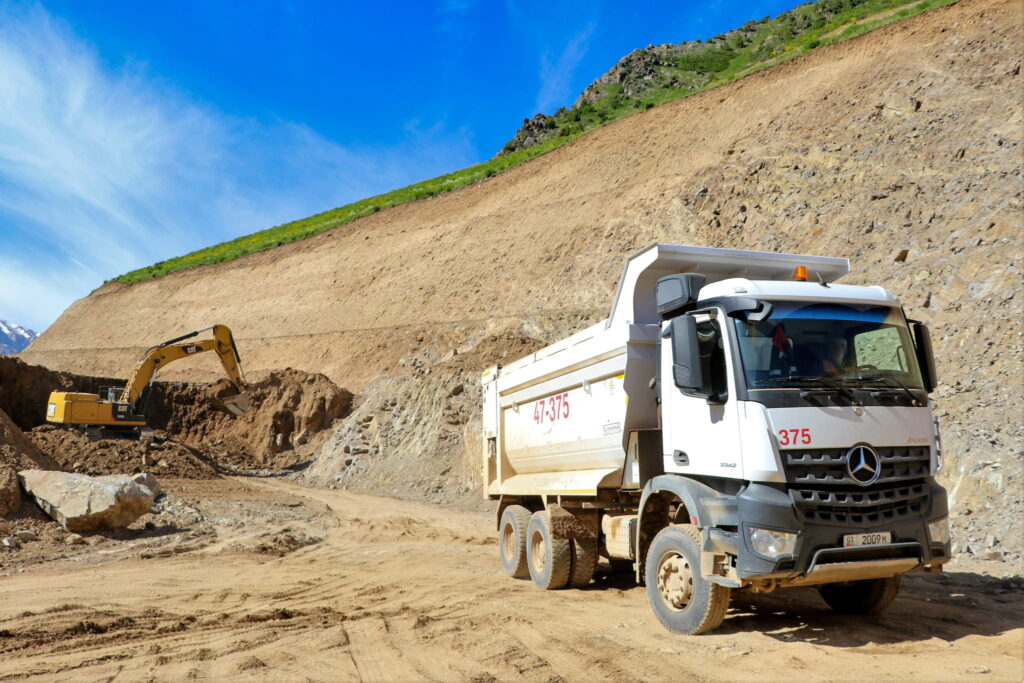
Silvercorp Metals is developing the Tulkubash and Kyzyltash gold projects in Kyrgyzstan. Photo: Silvercorp Metals
As 2025 approaches, a high-level government delegation from Kyrgyzstan met with mining investors in an unremarkable conference room in London to discuss a sensitive new initiative: restarting relations between Kyrgyzstan and Western capital.
Just five years after they wrested control of the Kumtor gold mine from a North American operator, the same powers that pushed for nationalization are now using growing demand for critical minerals as an opportunity to lure Western investors back to Kyrgyzstan. This bold strategy will test how quickly and to what extent trust can be restored in an era of rising resource nationalism.
Trust between both sides is very weak. In the Kumtor saga, the Kyrgyz government gained control of the country's largest gold mine from Canadian mining company Centerra Gold, which became the face of foreign mining capital after entering the country in the post-Soviet period of the 1990s. This incident has raised deep concerns among investors about property rights and political risks in Kyrgyzstan.
But it has also exposed unwanted allegations of possible high-level corruption, environmental destruction and resource depletion, leaving many Kyrgyz skeptical about foreign investment in mining. So any reset must be politically feasible in Bishkek, the capital, while reassuring outside investors that contracts will be honored and disputes resolved without arbitrary political interference.
Sold at home
The mining industry is a decisive issue in Kyrgyzstan's politics. The 2005 Tulip Revolution toppled then-President Askar Akaev, largely because he was accused of selling off Kyrgyzstan's mineral wealth to benefit his family and foreign mining corporations.
Incumbent President Sadyr Japarov, by contrast, rose to prominence in 2013 by leading a campaign of civil unrest aimed at nationalizing Kumtor and ultimately propelling him to the presidency in the 2020 revolution.
As a president whose nationalist movement was built on opposition to Western investment in mining, Japarov will want to avoid two things in particular.
Firstly, these are any actions that evoke memories of Kumtor. For actively government-backed projects, this presumably means no gold, no environmental disasters, and no Canadians. Accordingly, as part of the mining industry's relaunch, there is a strong focus on ESG standards and investment in critical minerals projects, mainly from UK and European investors.
This doesn't mean Canadian investment in gold is completely off the table. In January of this year, the Canadian company Silvercorp Metals paid $160 million to acquire a 70% stake in the Tulkubash and Kyzyltash gold mining projects from the British company Chaarat Gold. However, this deal was not actively promoted by Bishkek and involved the exchange of one foreign investor for another, rather than attracting a new Western partner to the state-backed project.
A second potential pitfall is that it may appear that the government is once again handing over control of Kyrgyzstan's mineral resources to foreigners without providing real and long-term benefits for the country. This concern is evident in the government's decision to maintain a 30% stake in the investment in Silvercorp Metals without any additional conditions.
This also likely explains why the government assets offered to Western investors are minority stakes, mostly in medium-life polymetallic deposits. These deposits involve complex metallurgy that can be mastered by Western experts, but leave ultimate control in Kyrgyz hands and provide options for retreat in the medium term if public opinion worsens.
In practice, however, such workarounds are unlikely to be necessary: abandoning the Chinese capital (and, more importantly, Chinese labor) that dominates projects in Kyrgyzstan is likely to be politically popular.
Thus, by the first criterion, the reset appears to be a well-planned measure designed to gain domestic political support, or at least not to provoke opposition.
Trustworthy abroad
What inspires confidence among Kyrgyz voters and politicians is of secondary importance to investors wanting to return to the country. Instead, they will focus on political cover, investment appeal and legal protection.
The most powerful point is the political component associated with the “reset”. In March 2026, foreign ministers from five Central Asian countries, including Kyrgyzstan, visited London for talks with the UK government, with mining high on the agenda. There is a clear coincidence of interests.
Britain is seeking to secure supplies of critical minerals and counter Russian influence in Central Asia, while countries in the region hope to develop their mineral resources to benefit their citizens and avoid becoming overly dependent on their powerful neighbors to the north and east.
The proposed projects are also well selected. Rather than proposing mega-projects for copper or other commodities, Kyrgyzstan is proposing a portfolio of small- and medium-sized projects. In particular, smaller projects can be completed quickly and require only moderate capital costs. This opens up good opportunities for Western investors who are thinking about returning to this market.
However, it is legal protection that seems to be the weakest aspect of the renewal process. Although investor information materials refer to discussions about the adoption of English common law and the establishment of independent arbitration mechanisms, there are no new investor protections yet. This forces investors to rely on existing bilateral investment treaties where they exist. EU investors can look forward to a modern treaty concluded in 2024, while UK investors have to look to the 1994 treaty. Canadian investors, as Centerra has found, have no protection at all under investment treaties.
It is unlikely that legal risks alone will derail the reset process. However, they will determine what kind of investors Kyrgyzstan can attract and under what conditions they will be willing to invest capital.
Niche appeal
This initiative was carefully calibrated taking into account the unstable internal politics of Kyrgyzstan. Focusing on critical minerals and signaling diplomatically is also a smart strategy to win back Western investors. However, given Kyrgyzstan's recent history, it is unlikely that this reset will immediately attract a significant amount of capital from the major financial markets.
This may well open the door to the first wave of risk-taking investors, most likely from specialist mining companies.
It won't be cheap. Investors who understand the risks will significantly reduce the value of Kyrgyzstan's assets. But if Bishkek is willing to accept that price, and if the first projects are licensed, operated and sold without political interference, the country can restore its reputation as an international mining jurisdiction and pave the way for large-scale investment in major industries.
![[Exhibition Highlights] LONGi Magnet at CIM Convention 2026 in Vancouver](https://ecdn.cnyandex.com/sylj/uploads/LONGi-Magnet-на-выставке-CIM-Convention-2026.jpg)
![[Exhibition Highlights] Longi Shines at the 19th Non-Metallic Minerals Conference](https://ecdn.cnyandex.com/sylj/uploads/Компания-Longi-блистает-на-19-й.jpg)