

Shahmurat Mutalip: The new mysterious tycoon of the Kazakh mining industry
2026-03-28
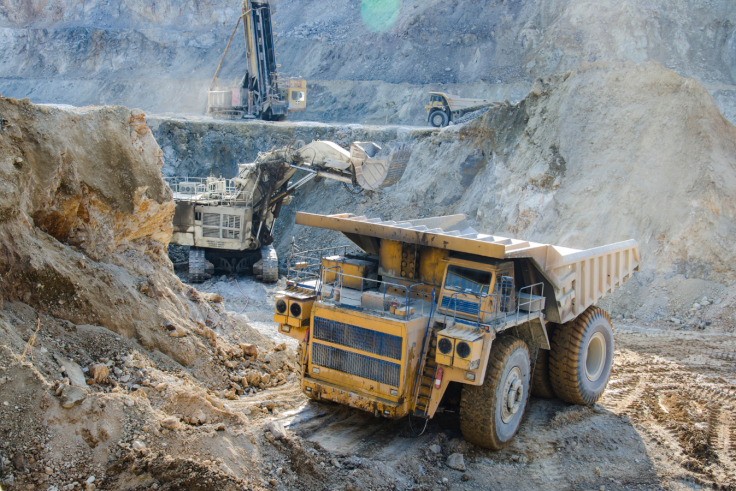
Since early 2026, the Kazakh mining industry has had one major theme in the spotlight: the bidding war for the Eurasian Resources Group (ERG). On one side is current CEO Shukhrat Ibragimov, who is reportedly seeking to consolidate control by buying out other major shareholders. On the other is Shahmurat Mutalip, who has submitted a bid to acquire a 40% stake in the company, apparently with the support of mining giant Glencore.
Currently, Mutalip appears to have the advantage. After successfully purchasing Altynalmas, one of Kazakhstan's largest gold mining companies, he appears to have an advantage in both financing and gaining control. This advantage is likely enhanced by Glencore's support. The company's motivation appears to be to ensure priority access to ferrochrome, a key component in the steel industry, as Kazakhstan is among the world's leading producers of this resource. Glencore is reportedly supporting Muthalip's bid with an upfront payment of $800 million in exchange for future mineral supplies.
The big question may be who will win the bidding war for the company, but an even more intriguing question is who is Shahmurat Mutalip? As the founder of Integra Construction, he has created a significant business presence, leading one of the largest construction companies in Kazakhstan.
What stands out, however, is his apparent lack of experience or investment history in the mining sector. Despite this, Mutalip is on the cusp of gaining control of a significant portion of Kazakhstan's metallurgical, gold, lead and zinc resources.
This is notable for two reasons. First, he is simultaneously negotiating several major mining assets, including ERG and Kazzinc, where, under a financing agreement with Glencore, he is expected to seek a 70% stake. This comes in addition to its recent acquisition of Altynalmas. Each of these transactions would typically be complex and time-consuming on its own.
Secondly, the Kazakh authorities have not publicly expressed objections to such a figure acquiring large segments of a strategically important industry. A similar scenario in Europe or North America would likely attract significant regulatory attention.
The explanation may lie in changing political dynamics in the highest echelon of the Kazakh state. Although President Kassym-Jomart Tokayev was initially close to him, in recent years he has sought to distance his administration from former President Nursultan Nazarbayev, whose network held significant stakes in key industries.
Mining, a central sector of Kazakhstan's economy, has become a key element of this shift. President Tokayev is reportedly attempting to redistribute ownership away from Nazarbayev-era elites and foreign interests in favor of a new class of domestic, politically acceptable and financially wealthy players.
Mutalip seems to fit this profile. As a Kazakh citizen with an established business, he fits this new model. At 35, he carries little political baggage and has no independent base of influence, making him more dependent on political support. This raises the possibility that his meteoric rise is at least partly supported by the government.
Rather than signaling complete transparency and reform of the economic system, these developments suggest continuity in the underlying power structures. Figures like Mutalip may represent a new generation of oligarchs - different in appearance but still tied to entrenched political influence.
In most acquisition scenarios, the buyer's industry expertise would be a critical factor. For example, if attempting to acquire a large pharmaceutical company in the UK or US, there would be a strong emphasis on industry expertise. This does not appear to be the case with Mutalip's bids to acquire ERG, Altynalmas and Kazzinc.
Due diligence should have raised questions about Muthalip's lack of industry experience, access to funding and ties to Russia. However, questions remain about whether Glencore conducted such checks and why it chose to work with an unknown entity. Interestingly, the US Department of Justice ended its oversight of Glencore in March 2025, and the decision to support Mutalip appears to have been made after that point.
This raises concerns among those who hope for a more open, competitive and transparent Kazakhstan. The fact that a relatively unknown figure could gain control of such strategically important assets suggests that meaningful reforms may not yet have taken place.
As the global race for critical minerals intensifies, the outcome of the battle for ERG could serve as a key indicator of Kazakhstan's future direction.
![[Exhibition Highlights] LONGi Magnet at CIM Convention 2026 in Vancouver](https://ecdn.cnyandex.com/sylj/uploads/LONGi-Magnet-на-выставке-CIM-Convention-2026.jpg)
![[Exhibition Highlights] Longi Shines at the 19th Non-Metallic Minerals Conference](https://ecdn.cnyandex.com/sylj/uploads/Компания-Longi-блистает-на-19-й.jpg)